

Biofuels in Public Transportation: Lessons from City Case Studies
Biofuels are already powering public transportation in cities that want to cut fossil-fuel use without replacing every bus at once. Examples from Stockholm, San Francisco, and Seattle show that success depends on more than the fuel itself: local supply, vehicle compatibility, depot operations, and credible lifecycle emissions accounting all matter.
These case studies are not proof that one fuel works everywhere. They offer a practical way to compare biodiesel, renewable diesel, and biogas with fleet needs and local conditions.
Why cities are exploring biofuels for public transit
Cities explore biofuels to reduce reliance on petroleum and lower the lifecycle emissions of transit fleets, especially where diesel buses remain in service. Biofuels can use existing vehicles or fueling systems in some cases, giving agencies a way to change the fuel mix while planning longer-term fleet upgrades.
Public transportation already moves many people with fewer vehicle trips than private cars, but conventional diesel buses still produce greenhouse gas emissions and local air pollutants. A lower-carbon fuel can complement efficiency measures, bus priority, and electrification. It may also diversify fuel supply, a useful hedge when agencies face uncertainty around energy prices or vehicle replacement schedules.
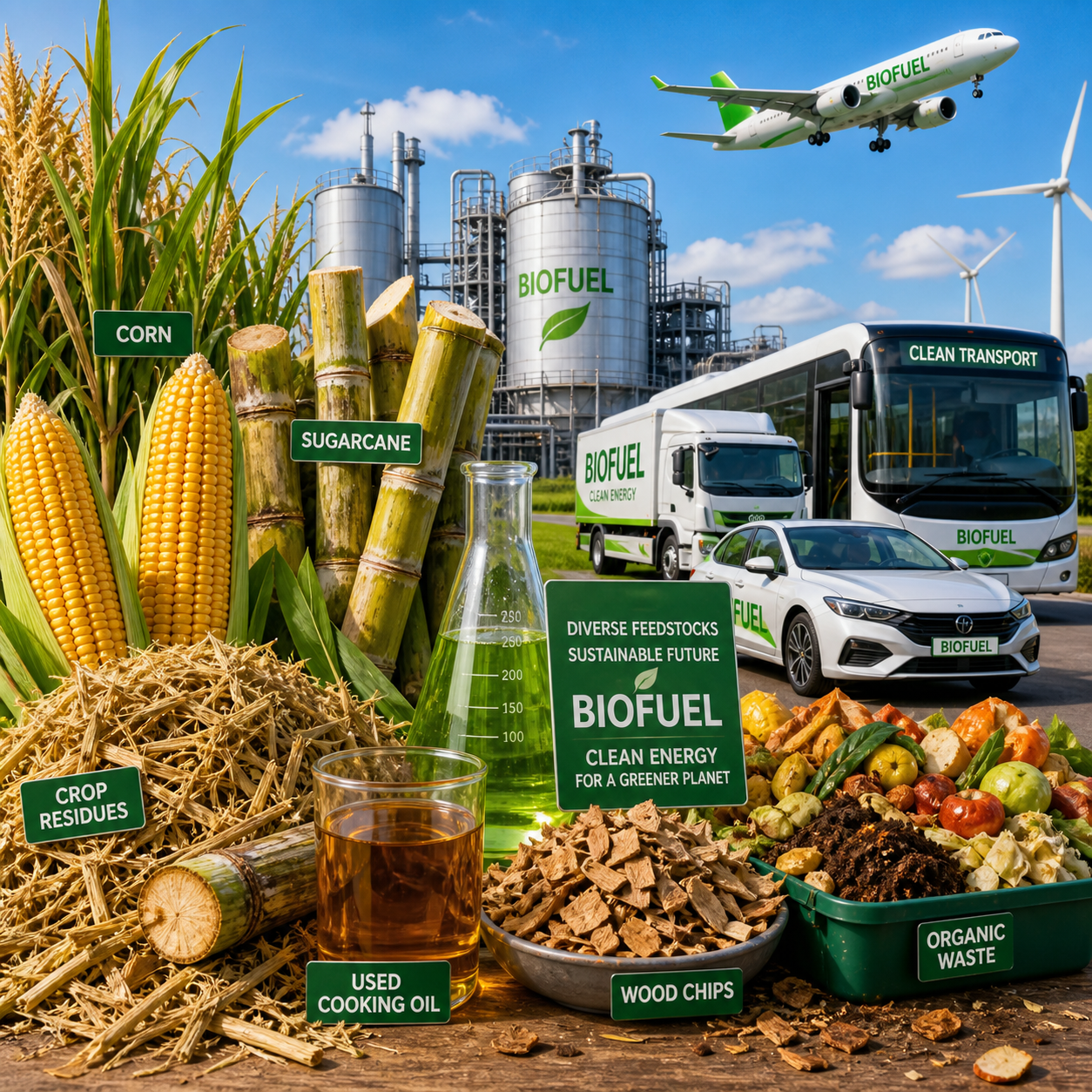
The climate benefit depends on the fuel pathway. A fuel made from waste oils or residues may have a different lifecycle emissions profile from one made from crops that require land, fertilizer, or significant processing energy. Agencies should distinguish tailpipe emissions, which occur during use, from lifecycle emissions across feedstock production, processing, transport, and combustion.
Biofuels are therefore best understood as one part of a clean transit strategy. They can help decarbonize existing fleets, but they do not automatically eliminate exhaust pollution or replace the need to evaluate battery-electric buses, hydrogen, and service improvements.
Biofuel options for transit fleets
The main biofuel options for transit buses are biodiesel, renewable diesel, and biogas; they differ in production, vehicle compatibility, and fueling needs. A city should choose based on its engines, depots, fuel contracts, and the verified sustainability of available feedstocks.
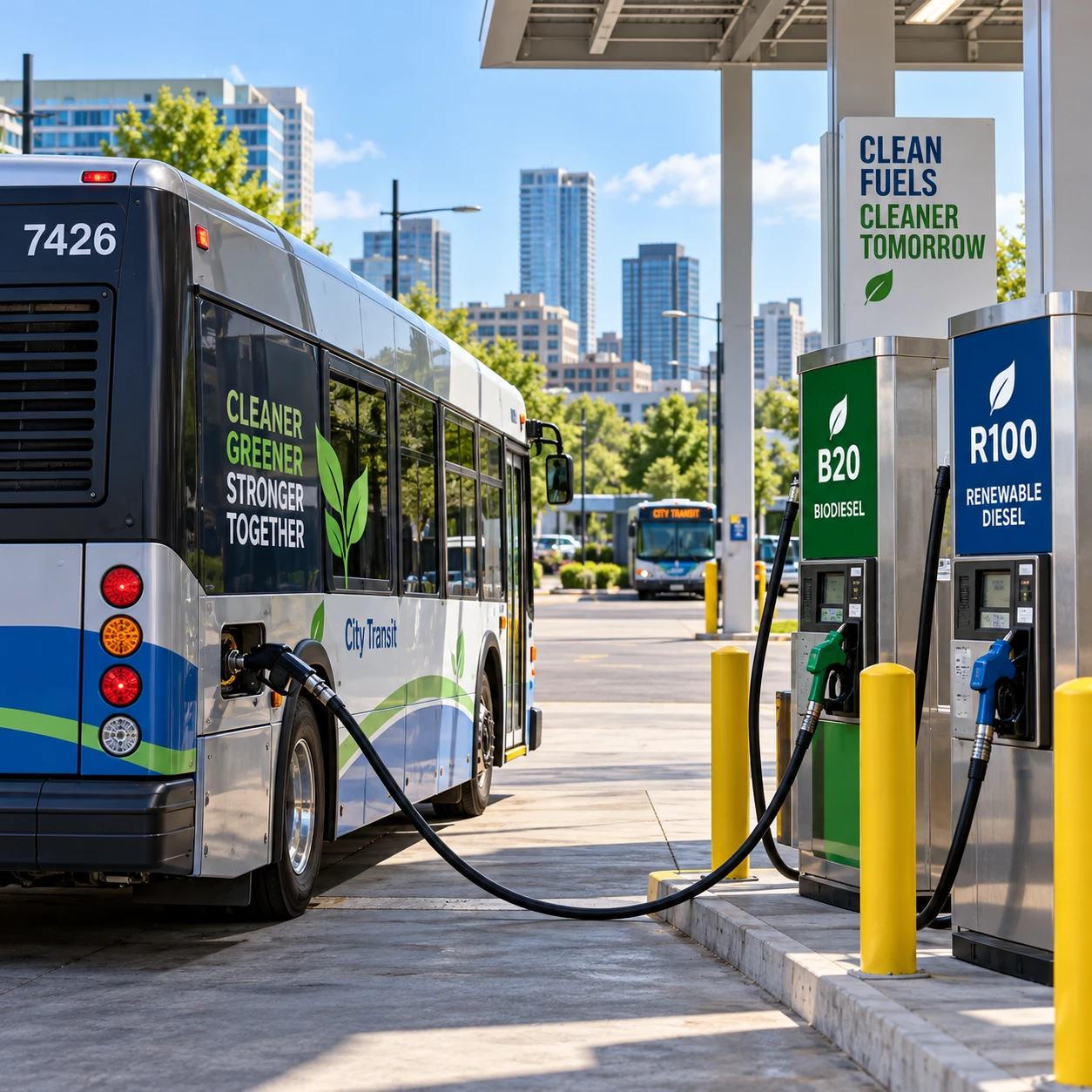
- Biodiesel is an ester-based fuel, commonly blended with petroleum diesel. Many diesel buses can use approved blends, but allowable blend levels depend on the engine maker, warranty, climate, and fuel quality. Higher blends can require closer attention to cold-weather performance, storage, and maintenance.
- Renewable diesel is a hydrocarbon fuel produced from renewable feedstocks, often through hydrotreating. It is chemically similar to petroleum diesel and can generally be used in compatible diesel engines as a drop-in fuel, subject to manufacturer guidance. It can simplify vehicle changes, though supply and price remain important constraints.
- Biogas, upgraded to renewable natural gas (RNG), can fuel buses designed for compressed natural gas (CNG). It requires gas storage and fueling equipment, and its emissions benefits depend on feedstock and methane controls. A CNG bus cannot simply switch to liquid diesel biofuel, or vice versa.
Compatibility is not the same as identical performance in every operating condition. Before procurement, confirm fuel specifications with bus manufacturers and the fuel supplier, then test the actual fuel in the local climate and duty cycle. The U.S. Department of Energy’s [Alternative Fuels Data Center](https://afdc.energy.gov/fuels/) provides background on alternative fuels and vehicle considerations.
City case studies: approaches to adoption
City case studies show different routes to adoption: Stockholm developed biogas use, San Francisco used biodiesel in diesel buses, and Seattle evaluated renewable diesel for transit operations. Their choices reflect local infrastructure and procurement decisions rather than a single universal model.
Stockholm: biogas in the bus network
Stockholm has used biogas in public transport as part of a wider regional effort to develop renewable fuels and vehicle infrastructure. Biogas can be produced from organic waste and wastewater, linking fuel supply with waste management. Buses designed for gas require dedicated storage and depot equipment, so this approach is most practical when a dependable gas network and fueling plan already exist. The lesson is to coordinate transit agencies, utilities, and waste operators early.
San Francisco: biodiesel in existing diesel buses
San Francisco’s transit agency, SFMTA, has reported using biodiesel blends in its diesel bus fleet. The approach allows an agency to use many existing diesel vehicles rather than immediately replace them, while fuel purchasing and quality controls become central operating tasks. Blend selection, maintenance guidance, and reliable deliveries matter, particularly when buses run long shifts and have limited time out of service.
Seattle: renewable diesel trials and fleet planning
King County Metro in the Seattle area has evaluated renewable diesel as an option for its diesel fleet. The drop-in nature of renewable diesel can reduce the need for vehicle modifications compared with fuels that require different engines, but a trial does not guarantee year-round availability or favorable economics. Agencies need to validate supply contracts, cold-weather performance, and lifecycle emissions data before expanding use.
These examples illustrate distinct implementation paths, not a head-to-head performance test. Fuel availability and program details change over time, so cities should check current agency procurement and sustainability reports before using any case study as a cost or emissions benchmark.
What the case studies reveal about results
The case studies show that operational feasibility can be established, but emissions reductions must be assessed by fuel pathway and measured against a clear baseline. A bus running on a biofuel may have similar day-to-day service capability while producing a different lifecycle carbon footprint.
For operations, the key questions are whether buses start reliably, meet route range and power needs, and can be fueled within depot schedules. Biodiesel blends and renewable diesel may fit existing diesel operations more easily than biogas, which requires CNG-compatible vehicles and dedicated infrastructure. “Drop-in” still does not remove the need to verify manufacturer approvals and fuel quality.
For climate outcomes, agencies should report the feedstock, production pathway, lifecycle emissions method, and comparison fuel. Avoid treating a supplier’s headline carbon-intensity figure as a fleet-wide result without checking its assumptions. Land-use effects, processing energy, transport distance, and methane leakage can materially alter the assessment, especially for biogas.
Operational success and environmental performance are separate tests. A fuel can work well in buses yet offer modest climate benefits if its feedstock is carbon intensive. Conversely, a promising low-carbon pathway may be difficult to scale if its supply is inconsistent or its depot requirements are impractical.
Challenges in scaling biofuel programs
Scaling biofuel programs is difficult because cities must secure dependable fuel, manage cost and compatibility, and verify lifecycle impacts at the same time. A successful pilot can reveal operating issues, but it does not prove that the same fuel can serve an entire regional fleet year-round.
- Supply and distribution: Sustainable feedstocks are limited, and competing demand can affect availability. Agencies should confirm delivery capacity, backup arrangements, and whether a supplier can meet the required fuel specification.
- Cost and contract risk: Biofuel prices may vary with feedstock markets, policy incentives, and processing capacity. Compare total delivered cost, not just the quoted price per gallon or equivalent unit.
- Vehicles and depots: Biodiesel and renewable diesel generally use diesel infrastructure, subject to compatibility checks. Biogas requires gas-capable buses, compression or upgrading arrangements, and appropriate fueling equipment. Conversion costs can make a fuel unattractive even when its purchase price looks favorable.
- Lifecycle credibility: A “renewable” label alone does not establish a climate benefit. Trace feedstocks and document the emissions method, including indirect effects and methane leakage where relevant.
There is also an opportunity cost: investing heavily in one fuel pathway may delay depot upgrades or vehicle purchases for another. Cities should compare biofuel options with battery-electric bus deployment route by route, considering grid capacity, charging time, service patterns, and the expected life of current vehicles.
Practical lessons for cities considering biofuels
Cities considering biofuels should screen local feedstocks, fleet compatibility, depot readiness, contract reliability, and lifecycle emissions before choosing a fuel. A staged evaluation helps agencies identify failure points while limiting the cost of a premature fleet-wide commitment.
- Map the fleet: Record engine types, age, warranties, daily mileage, route terrain, and depot locations. Identify which buses can use a candidate fuel under manufacturer guidance.
- Check the local fuel pathway: Ask suppliers for feedstock origin, production method, delivery volumes, seasonal constraints, and independently documented lifecycle carbon intensity. Treat vague sourcing claims as an unresolved risk.
- Audit infrastructure and operations: Confirm tank compatibility, storage capacity, safety requirements, fueling throughput, and staff training. For biogas, include the full cost and schedule for gas vehicles and depot equipment.
- Run a monitored pilot: Use a representative group of buses and routes. Track fuel use, maintenance events, cold starts, service interruptions, delivered cost, and emissions assumptions over a defined period that includes relevant seasonal conditions.
- Set expansion gates: Scale only if supply, vehicle performance, lifecycle benefits, and total cost meet written targets. Keep a contingency plan if deliveries fall short or the feedstock pathway changes.
This framework prevents a common mistake: choosing a fuel because it is compatible with today’s buses, then discovering that local supply or lifecycle evidence is weak. It also guards against the opposite mistake, rejecting a useful transitional option because it cannot solve every transit emissions challenge on its own. The right role for biofuels depends on local conditions and the agency’s wider fleet plan.
Frequently asked questions about biofuels in public transportation
Biofuel suitability depends on the bus engine, fuel specification, infrastructure, and verified fuel pathway. These answers clarify the most common planning questions.
Can existing transit buses run on biofuels?
Many diesel buses can use approved biodiesel blends or renewable diesel, but agencies must follow manufacturer limits and fuel-quality requirements. Biogas requires buses designed for natural gas, along with compatible depot equipment.
What is the difference between biodiesel and renewable diesel?
Biodiesel is an ester fuel typically blended with petroleum diesel, while renewable diesel is a hydrocarbon fuel more chemically similar to conventional diesel. Their compatibility, production processes, and handling requirements differ.
Do biofuels reduce public transit emissions?
They can reduce lifecycle greenhouse gas emissions when produced from suitable feedstocks using a lower-emissions pathway. The result varies, so agencies should disclose feedstock and production assumptions rather than relying on the fuel name alone.
What should a city assess before adopting biofuels?
Assess fuel supply, delivered cost, vehicle approvals, depot infrastructure, maintenance needs, and lifecycle emissions. Test these factors in a monitored pilot before committing to broad adoption.