


The Science Behind Biofuel Combustion and Efficiency

Biofuels can power transport engines through the same basic process as gasoline and diesel: fuel reacts with oxygen, releasing heat that drives mechanical work. The differences lie in fuel chemistry and properties, which affect how combustion starts and spreads, how much energy is stored in each litre, and what comes out of the exhaust.
That distinction matters when judging clean transport. Engine efficiency describes how well an engine turns fuel energy into useful work; greenhouse gas emissions also depend on how the fuel was produced and delivered. Bioethanol, biodiesel, feedstock, processing, and engine compatibility all influence the full picture.
What Happens During Combustion?
Combustion is a chemical reaction in which fuel combines with oxygen and releases heat. Inside an engine, that heat raises gas pressure and moves pistons, turning chemical energy into mechanical power.
In a spark-ignition engine, such as a conventional gasoline engine, fuel and air mix before or during entry into the cylinder. A spark plug ignites the mixture. The flame travels through the compressed charge, and expanding gases push the piston down. In a compression-ignition diesel engine, air is compressed until it becomes hot; fuel injected into that air then ignites.
Neither process converts all the fuel’s energy into motion. Some energy leaves as hot exhaust or transfers to engine components and coolant. Friction and pumping air through the engine also use energy. The share converted into useful work is the engine’s thermal efficiency, which depends on engine design, load, speed, and combustion quality.
Combustion needs an appropriate amount of oxygen. Too little air can leave fuel partly burned, increasing pollutants such as carbon monoxide and unburned hydrocarbons. Excess air can also reduce efficiency in some operating conditions by carrying heat away or changing combustion temperatures. Engine controls aim to keep the air–fuel ratio within a suitable range for the fuel and task.
How Biofuels Differ from Conventional Fuels
Biofuels differ from conventional fuels in chemical composition and physical properties, even though they release energy through combustion. Bioethanol is an alcohol commonly blended with gasoline, while biodiesel is made of fatty-acid esters and is used in diesel engines, often in blends with petroleum diesel.
Bioethanol contains oxygen within its molecules, unlike hydrocarbons such as gasoline. This affects how it mixes with air and burns. Ethanol also has a high octane rating, which can help resist engine knock in a compatible spark-ignition engine. However, its energy per litre is lower than gasoline’s, so a vehicle may need more fuel by volume to travel the same distance.
Biodiesel has properties closer to petroleum diesel in how it is used in compression-ignition engines, but its viscosity, cold-flow behavior, and oxidation stability can differ. Those characteristics matter for fuel injection, storage, and performance in cold weather. Biodiesel blends are identified by the proportion of biodiesel in the mixture, such as B20, which contains 20% biodiesel by volume.
There is no single “biofuel behavior.” Results depend on the specific fuel, blend, vehicle, and conditions. The U.S. Department of Energy’s Alternative Fuels Data Center provides fuel information and guidance on alternative-fuel applications.
Fuel Properties That Shape Efficiency
Fuel properties shape efficiency by affecting how much energy is available, how reliably combustion begins, and how well fuel and air mix. Energy density matters, but it is only one part of engine performance.
Energy density describes the energy stored in a given mass or volume of fuel. A lower energy density can mean higher fuel consumption by volume for the same work, but it does not automatically mean a less efficient engine. Efficiency measures the fraction of fuel energy converted into useful output. A compatible engine may use a fuel’s properties effectively while still requiring a larger volume of it.
Ignition behavior matters too. Octane rating indicates resistance to knock in spark-ignition engines; cetane rating relates to ignition quality in diesel engines. These ratings describe different combustion characteristics, not a universal measure of energy content or environmental benefit. Fuel viscosity and volatility also affect injection, atomization, evaporation, and mixing.
The air–fuel ratio must match both the fuel and the engine’s operating strategy. Ethanol blends can require adjustments to fuel delivery because ethanol contains oxygen and has different energy content from gasoline. In diesel engines, biodiesel properties can influence how fuel sprays into the cylinder. Modern engine controls may adapt within limits, but an unapproved fuel or blend can exceed those limits.
- Energy density influences the fuel volume or mass needed for a given trip.
- Ignition and volatility affect starting, flame development, and combustion stability.
- Viscosity and cold-flow properties affect fuel handling and injection, particularly in low temperatures.
The Role of Engine Design and Operating Conditions
Engine design and operating conditions determine whether a biofuel’s properties support clean, efficient combustion. Fuel compatibility, calibration, and the way a vehicle is driven all affect real-world results.
Flex-fuel vehicles are designed to operate on gasoline and specified ethanol blends, with sensors and engine controls adjusting fuel delivery and ignition timing as needed. Diesel vehicles may be approved for particular biodiesel blends, but approval varies by model and manufacturer. Check the owner’s manual or manufacturer guidance before using a blend; a fuel that works in one engine may cause problems in another.
Combustion also changes with engine temperature, speed, and load. Cold starts can be difficult for some fuel blends because evaporation or ignition behavior differs from the fuel the engine was designed around. At steady highway speeds, an engine may operate in a more efficient range than it does in stop-and-go traffic. Frequent acceleration, idling, and short trips can raise fuel use regardless of whether the fuel is bio-based.
For fleet operators, a practical evaluation starts with three checks: vehicle approval, local climate and duty cycle, and fuel supply consistency. Choosing a higher blend for its renewable content means accepting any compatibility or cold-weather limits specified for that vehicle. Never assume that a fuel label alone confirms suitability for every engine.
Efficiency, Emissions, and Trade-Offs
Biofuel combustion emissions depend on the fuel blend, engine, and operating conditions, while total greenhouse gas emissions also depend on fuel production and distribution. Tailpipe performance and lifecycle impact are related, but they are not the same measure.
At the tailpipe, an oxygenated fuel can change combustion products, but it does not eliminate carbon dioxide or other emissions. Engine calibration and after-treatment systems, such as catalytic converters or diesel particulate filters, also shape exhaust results. A fuel that performs well in one application may produce different emissions in another.
Lifecycle greenhouse gas emissions account for more than combustion. They can include growing or collecting feedstock, processing it into fuel, transporting it, and any land-use changes associated with production. The outcome varies by feedstock and production pathway. A waste-derived fuel may have a different lifecycle profile from a crop-based fuel, but the details of collection and processing still matter.
Keep three questions separate when comparing options:
- Engine efficiency: What fraction of fuel energy becomes useful work?
- Vehicle energy use: How much fuel does the vehicle consume over a distance?
- Lifecycle emissions: What greenhouse gases arise across the fuel’s supply chain?
Conflating these measures can make a fuel seem either better or worse than it is. A lower-energy-density fuel may raise litres consumed per kilometre without lowering the engine’s thermal efficiency. Conversely, a favorable lifecycle estimate does not guarantee lower tailpipe emissions in every vehicle.
From Feedstock to Fuel Performance
Feedstock and processing influence both fuel quality and the broader transport benefits of biofuels. The material used to make the fuel affects its chemistry, while production controls help determine whether it meets specifications for reliable engine use.
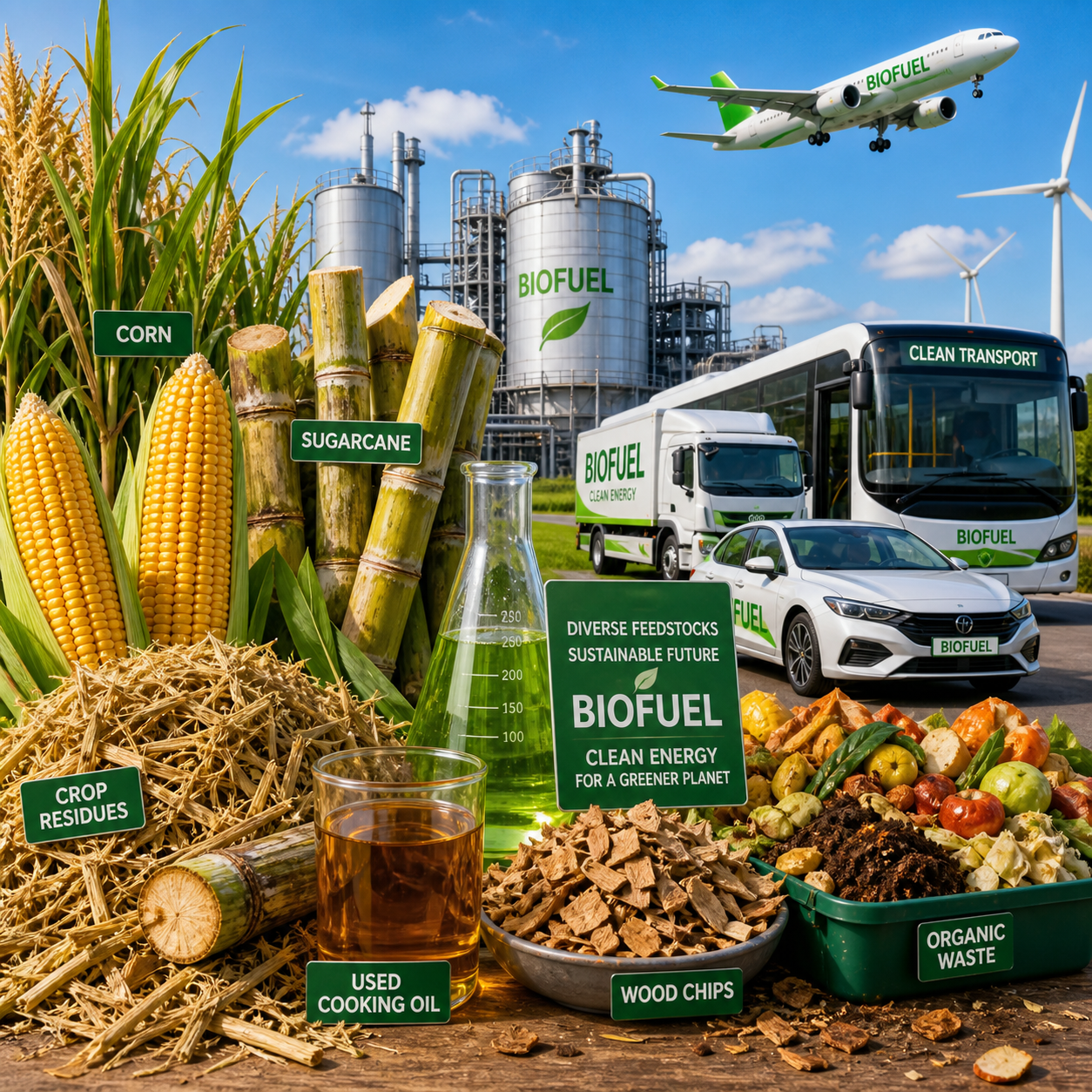
Bioethanol can be produced from sugar- or starch-rich crops, as well as from cellulosic material such as agricultural residues. Biodiesel is commonly made from vegetable oils, animal fats, or used cooking oil. These feedstocks differ in availability, processing needs, and potential land and resource impacts. The label “biofuel” alone does not reveal the full environmental profile.
Processing converts raw material into a fuel with properties suitable for engines and storage. Quality standards help control characteristics such as water content, acidity, and stability. Poor-quality or contaminated fuel can contribute to deposits, corrosion, filter blockage, or unreliable operation, regardless of its renewable origin.
A useful way to assess a transport biofuel is the pathway-to-piston test: trace the feedstock, check the processing and fuel specification, confirm engine approval, then assess real-world efficiency and lifecycle emissions. This sequence avoids treating fuel production, engine combustion, and climate impact as interchangeable questions. It also shows where a potential benefit can be weakened, such as by energy-intensive processing or unsuitable vehicle use.
Frequently Asked Questions About Biofuel Combustion
Biofuels release energy through combustion much like gasoline and diesel, but their properties and production pathways can change engine performance and emissions. These answers clarify common points for drivers and fleet planners.
Does biofuel produce energy differently from gasoline or diesel?
The basic process is the same: fuel reacts with oxygen and releases heat. Differences in chemical composition, energy density, ignition behavior, and mixing affect how combustion proceeds and how much fuel is needed.
Does lower energy density always mean lower engine efficiency?
No. Lower energy density means less energy per unit of fuel, often by volume, but engine efficiency is the share of that energy converted into useful work. A vehicle may consume more litres per kilometre without having a less efficient engine.
Can existing engines run on biofuels?
Some can, within manufacturer-approved fuel types and blend limits. Flex-fuel vehicles support specified ethanol blends, and some diesel vehicles are approved for particular biodiesel blends. Check the vehicle manual because compatibility varies.
How do biofuels affect transport emissions?
They can change tailpipe emissions, but the result depends on fuel chemistry, engine calibration, and exhaust controls. Greenhouse gas benefits must also be assessed across the fuel lifecycle, including feedstock production, processing, and transport.