

Sustainable Aviation Fuels (SAF): Paving the Way for Cleaner Skies
Aviation connects the world — but it also leaves a significant carbon trail. Responsible for roughly 2–3% of global CO₂ emissions, the aviation sector faces growing pressure to clean up its act. Sustainable Aviation Fuel has emerged as the most immediate, scalable answer the industry has found so far. It won't solve everything on its own, but the progress is real and the direction is clear.
What Is Sustainable Aviation Fuel (SAF)?
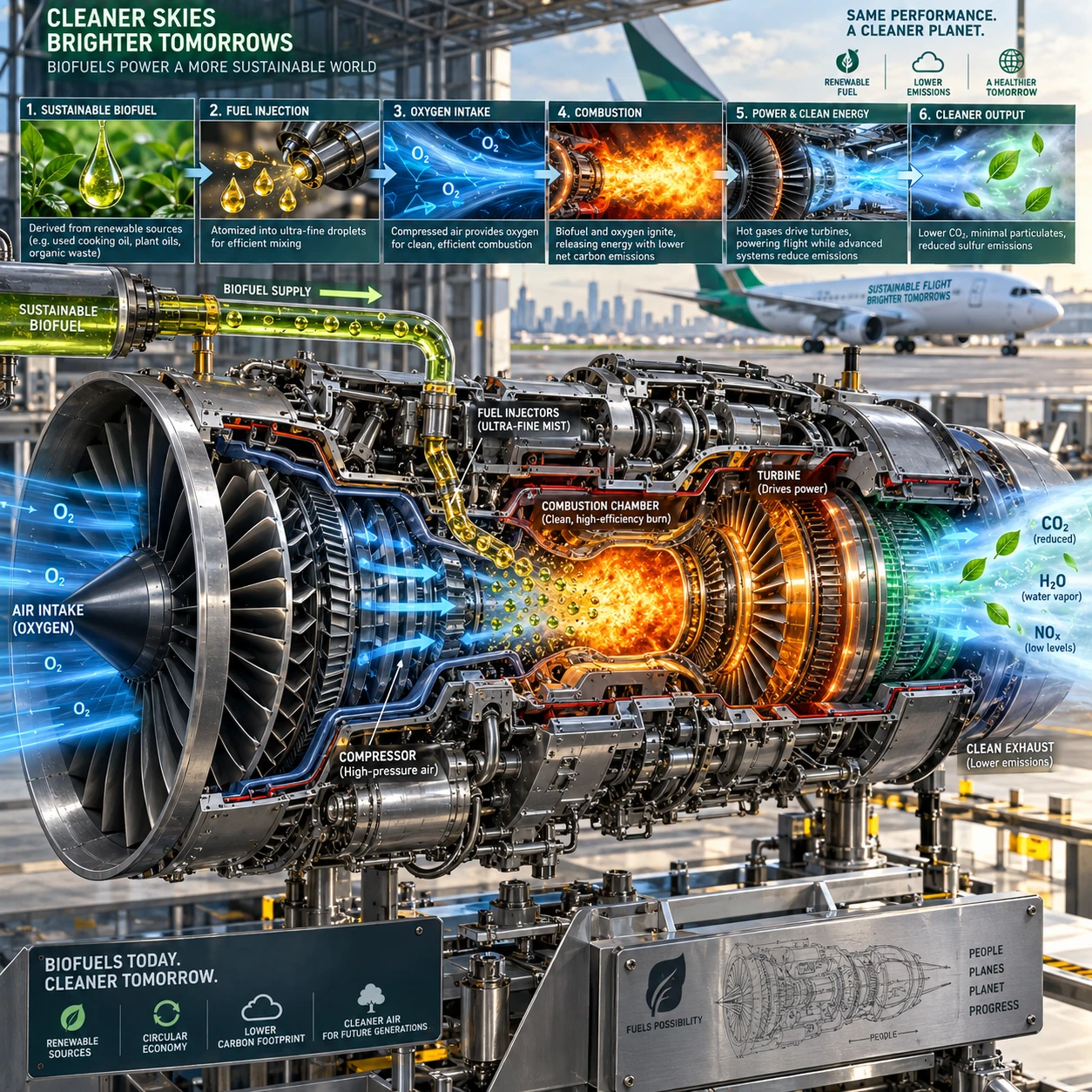
Sustainable Aviation Fuel is a category of jet fuel produced from non-fossil, renewable, or waste-based sources that can replace or blend with conventional jet fuel without requiring changes to aircraft engines or airport infrastructure. That last point is critical: SAF is a drop-in fuel, meaning it works inside existing aircraft and fueling systems today.
Unlike electric or hydrogen propulsion — technologies that require fundamentally redesigned aircraft — SAF slots into the current aviation ecosystem. Airlines can blend it with conventional kerosene at ratios currently approved up to 50%, with ongoing certification work pushing toward 100% unblended use in the future.
What makes a fuel "sustainable" in this context isn't just where it comes from, but its full lifecycle carbon profile. A fuel derived from waste cooking oil, for instance, releases CO₂ when burned — but that carbon was already cycling through the biosphere, not locked underground like fossil carbon. This distinction, measured through lifecycle assessment (LCA), is what separates SAF from conventional jet fuel at a fundamental level.
How Is SAF Produced? Key Pathways and Feedstocks
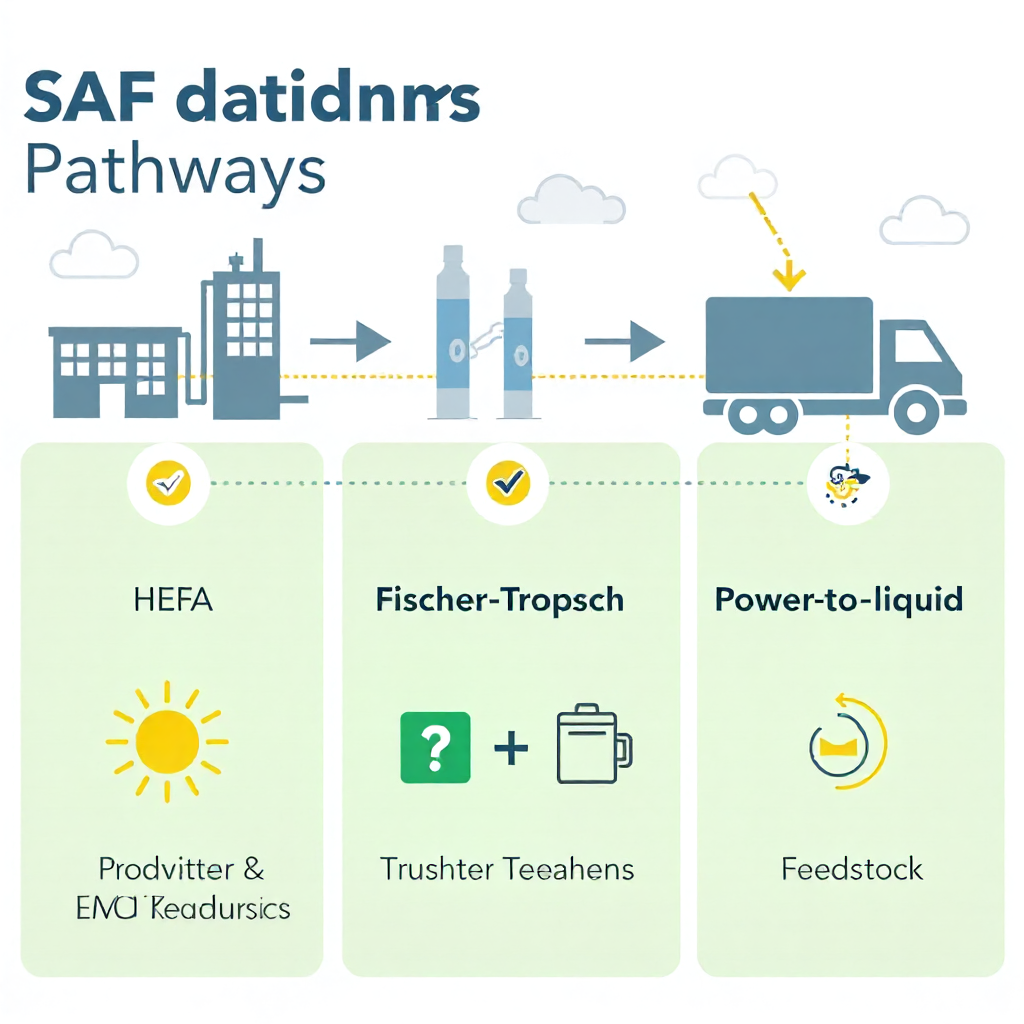
SAF can be made through several distinct production pathways, each drawing on different feedstocks and chemical processes. The three most commercially relevant routes today are HEFA, Fischer-Tropsch synthesis, and Power-to-Liquid technology.
HEFA (Hydroprocessed Esters and Fatty Acids) is currently the dominant pathway. It converts fats, oils, and greases — including used cooking oil, animal fats, and certain plant oils — into jet-grade fuel through hydroprocessing. HEFA-based SAF is the most commercially mature option and accounts for the vast majority of SAF produced today.
Fischer-Tropsch (FT) synthesis converts solid or gaseous carbon-rich materials — agricultural residues, forestry waste, municipal solid waste — into synthesis gas (syngas), which is then chemically assembled into liquid hydrocarbons. This pathway can handle a much wider range of feedstocks than HEFA, which matters enormously for long-term scale.
Power-to-Liquid (PtL), or e-fuels, represents the frontier. It uses renewable electricity to split water into hydrogen, then combines that hydrogen with captured CO₂ to synthesize jet fuel. The lifecycle emissions potential here is exceptional — close to carbon-neutral if the electricity is truly renewable — but the energy intensity and current cost make it a mid-to-long-term proposition rather than an immediate fix.
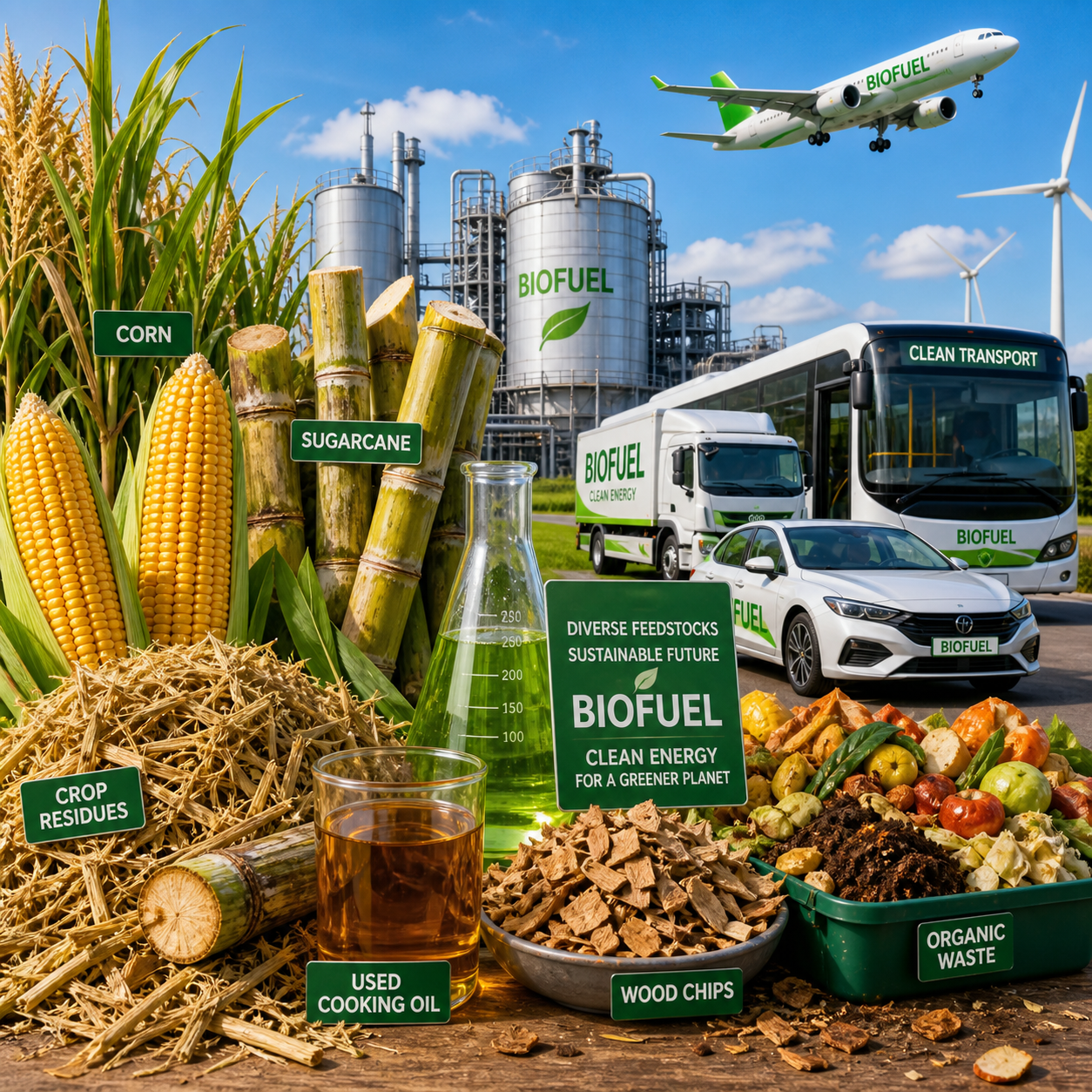
The feedstock landscape is deliberately broad: agricultural residues, municipal solid waste, algae, woody biomass, and captured carbon dioxide all have roles to play. Diversifying feedstocks is essential — no single source can supply the volumes aviation will eventually need.
The Environmental Case: How Much Can SAF Cut Emissions?
Compared to conventional jet fuel on a lifecycle basis, SAF can reduce carbon emissions by up to 80% — and in some PtL scenarios, potentially more. That figure comes with important caveats, but the directional case is solid.
The lifecycle assessment methodology is what makes this comparison meaningful. When you burn conventional jet fuel, you're releasing carbon that spent millions of years underground. When you burn SAF derived from waste biomass, the CO₂ released was recently absorbed from the atmosphere by living organisms. The net addition to atmospheric carbon is dramatically lower.
Blending ratios matter here. At today's approved 50% blend ceiling, the maximum lifecycle reduction is roughly half the theoretical maximum for a given SAF type. Airlines flying on 10–20% SAF blends — which is more common in practice — achieve proportionally smaller reductions. That's not a reason to dismiss SAF; it's a reason to accelerate certification of higher blends and scale production.
One honest limitation: lifecycle assessments don't capture aviation's full climate impact. Aircraft also emit nitrogen oxides and water vapor at altitude, contributing to non-CO₂ warming effects. SAF addresses the carbon dimension well; the full picture of aviation's climate footprint is more complex. Researchers and policymakers are actively working to account for these effects in future frameworks.
SAF in the Global Decarbonization Agenda
SAF has become central to international aviation's decarbonization strategy, most visibly through CORSIA — the Carbon Offsetting and Reduction Scheme for International Aviation developed by the International Civil Aviation Organization (ICAO). CORSIA sets a framework for airlines to offset growth in emissions above 2019 levels, and SAF is recognized as one of the primary compliance tools.
Beyond CORSIA, the International Air Transport Association (IATA) has committed the aviation industry to net-zero carbon emissions by 2050. SAF is expected to contribute the largest single share of the reductions needed to reach that target — some analyses suggest it could account for 65% or more of the required cuts when combined with efficiency improvements and other measures.
Regional policy is accelerating adoption. The European Union's ReFuelEU Aviation regulation mandates increasing SAF blending requirements at EU airports, starting at 2% in 2025 and rising to 70% by 2050. The United States has introduced tax incentives under the Inflation Reduction Act to stimulate domestic SAF production. These policy signals are beginning to move investment in a meaningful direction.
Challenges Holding SAF Back — and How the Industry Is Responding
The three main barriers to SAF scaling are cost, production volume, and feedstock availability — and none of them are trivial.
On cost: SAF currently costs two to five times more than conventional jet fuel, depending on the production pathway and feedstock. For an industry that operates on thin margins and where fuel is the largest single operating expense, that premium is a genuine obstacle. Tax credits, blending mandates, and carbon pricing mechanisms are the primary levers governments are using to close the gap.
Production scale is the second constraint. SAF currently represents a fraction of a percent of total jet fuel consumption globally. Reaching even 10% of global aviation fuel demand by 2030 would require a dramatic expansion of production capacity — new refineries, new supply chains, significant capital investment.
Feedstock availability creates a third pressure point. Used cooking oil, the dominant HEFA feedstock today, is finite. Competition for waste fats and oils is already increasing as other sectors (road transport, marine) also pursue biofuel pathways. Scaling SAF to the volumes aviation needs will require moving beyond today's preferred feedstocks toward agricultural residues, municipal waste streams, and eventually PtL routes powered by renewable electricity.
The industry's response has been a combination of long-term offtake agreements (airlines committing to buy SAF volumes years in advance to de-risk producer investment), government-backed production incentives, and accelerated research into next-generation pathways. Progress is measurable, even if the pace feels slow relative to the urgency.
SAF as Part of the Broader Clean Transport Revolution
SAF doesn't exist in isolation — it's one thread in a much larger fabric of biofuel and clean transport innovation reshaping how the world moves people and goods.
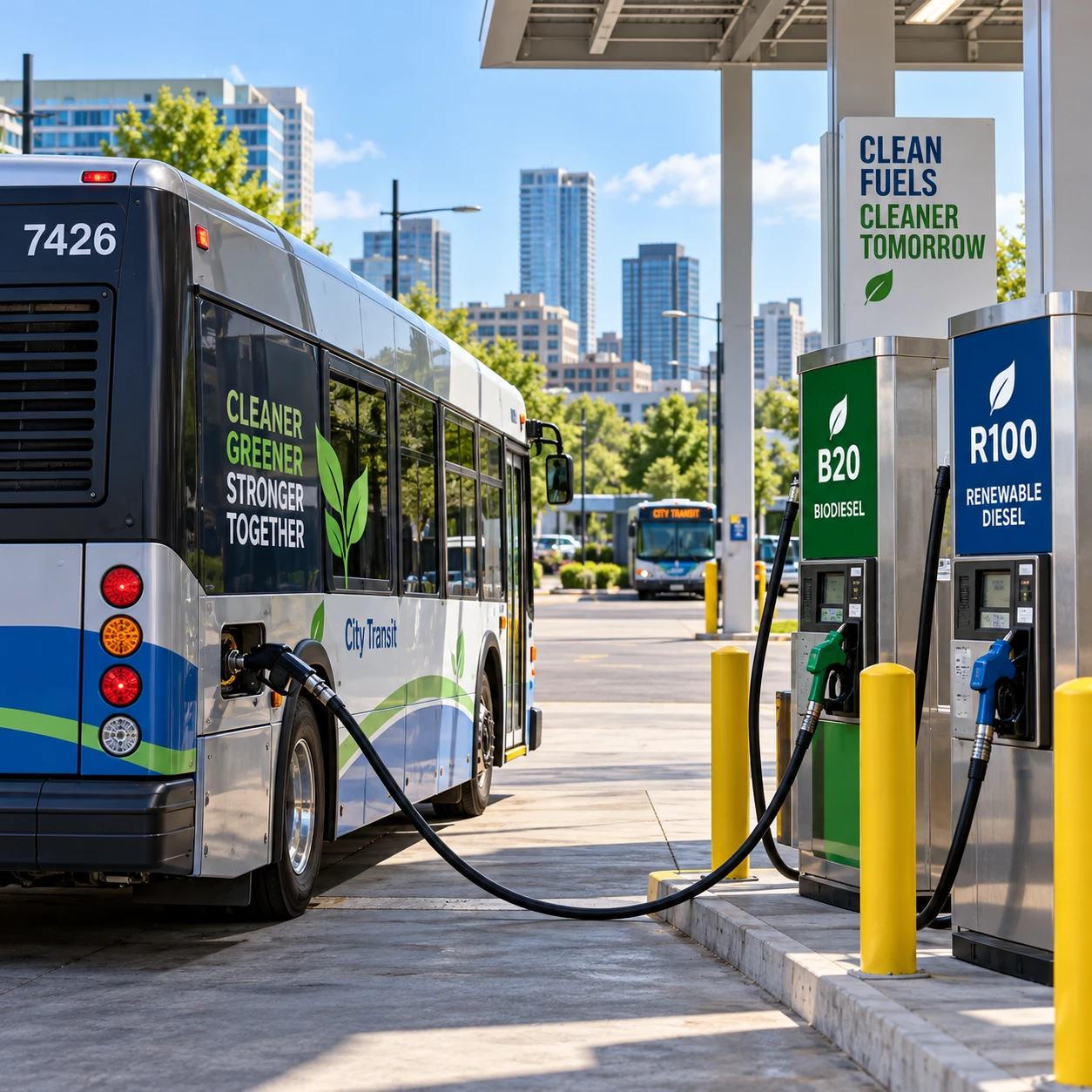
The same feedstocks that produce SAF — waste oils, agricultural residues, municipal solid waste — also feed production of biodiesel, renewable diesel, and biogas for road and marine transport. The infrastructure, supply chains, and policy frameworks being built for one sector strengthen the others. A waste cooking oil collection network that serves SAF producers also reduces the feedstock cost for road transport biofuels.
Aviation is unusual among transport sectors in that electrification and hydrogen face the steepest near-term technical hurdles — battery energy density and hydrogen storage make zero-emission long-haul flight a longer-horizon prospect. That's precisely why SAF carries more weight in aviation's decarbonization mix than liquid biofuels do in road transport, where electric vehicles are already displacing fossil fuel demand at scale.
This doesn't mean SAF and electric aviation are in competition. Short-haul electric aircraft, hydrogen-powered regional jets, and SAF-powered long-haul widebodies can all coexist — and likely will. The clean transport transition is plural by nature.
What the Future of SAF Looks Like
The trajectory for SAF points toward higher volumes, lower costs, and a more diverse production base — but the timeline depends heavily on policy consistency and investment momentum.
By the mid-2030s, the industry expects HEFA capacity to be substantially larger, Fischer-Tropsch plants processing municipal and agricultural waste to be commercially operational at scale, and the first commercial PtL facilities to be producing e-fuels in meaningful quantities. Certification of 100% SAF blends — already demonstrated in test flights — is expected to become standard approval within this decade.
Cost parity with conventional jet fuel remains the defining milestone. Most projections place this somewhere between 2035 and 2045, depending on carbon pricing trajectories, renewable energy costs (critical for PtL), and production learning curves. The faster renewable electricity costs fall, the more attractive the Power-to-Liquid pathway becomes — and PtL has the advantage of not competing for finite biological feedstocks.
For travelers and businesses, the near-term reality is that SAF will increasingly appear as a voluntary premium option — airlines offering SAF certificates for flights, corporate travel programs setting SAF blend targets. These choices send market signals that matter. They demonstrate demand, which helps justify the investment in production capacity that will eventually bring costs down for everyone.
Cleaner skies by 2050 are achievable. SAF is the most immediate, scalable tool aviation has to start getting there — imperfect, still expensive, but real and improving. The work happening now in refineries, policy chambers, and research labs is laying the runway for a fundamentally different kind of aviation.
Frequently Asked Questions
Is SAF safe to use in existing aircraft without modifications?
Yes. SAF is certified as a drop-in fuel, meaning it can be used in existing jet engines and fueling infrastructure without any modifications. Current approvals allow blending up to 50% SAF with conventional jet fuel, and test flights using 100% SAF have already been completed successfully.
Can SAF alone make aviation carbon-neutral?
SAF is expected to be the largest single contributor to aviation's net-zero target, but not the only one. Efficiency improvements, demand management, carbon offsetting, and eventually hydrogen and electric propulsion for shorter routes will all need to contribute. SAF is essential — it's not sufficient on its own.
What is the difference between SAF and conventional biofuels?
SAF is a specific category of biofuel engineered to meet the precise chemical specifications of jet fuel (kerosene). Conventional biofuels like biodiesel or bioethanol are formulated for road transport engines and cannot be used in jet aircraft. SAF undergoes more rigorous processing and certification to achieve the energy density, freezing point, and combustion characteristics aviation requires.
How much more expensive is SAF than regular jet fuel?
SAF currently costs roughly two to five times more than conventional jet fuel, depending on the production pathway and feedstock. HEFA-based SAF sits at the lower end of that range; Power-to-Liquid e-fuels are currently at the higher end. Policy incentives and scaling production are expected to narrow this gap over time.
How can travelers or businesses support SAF adoption?
Travelers can opt into airline SAF programs where available, which direct funds toward SAF procurement. Businesses can set SAF blend targets in their corporate travel policies and purchase SAF certificates to cover their flight emissions. Both actions create demand signals that encourage airlines and producers to invest in scaling supply.