


The Economic Impact of Biofuel Adoption on Global Markets: Opportunities, Tradeoffs, and the Road Ahead
Biofuels have moved well beyond the experimental margins of energy policy. From Brazil's sugarcane ethanol program to the European Union's push for sustainable aviation fuel, the economic footprint of biofuel adoption is now measurable in trade flows, commodity prices, rural wages, and government budgets. Understanding that footprint — honestly, with its contradictions intact — is essential for anyone working in sustainability, clean transport, or agricultural policy.
What Is Driving Global Biofuel Adoption?
Three forces are accelerating biofuel uptake worldwide: energy security concerns, decarbonization commitments, and regulatory mandates. No single factor dominates everywhere, but together they have created a durable policy environment that makes biofuel investment increasingly predictable.
After the energy price shocks of the early 2020s, many governments recognized that domestic biofuel production could reduce dependence on imported petroleum. Countries with strong agricultural bases — Brazil, the United States, Indonesia, India — saw an obvious alignment between farm output and fuel supply. Meanwhile, net-zero targets under the Paris Agreement gave decarbonization goals a legal and diplomatic weight that earlier climate pledges lacked.
Blending mandates have been the most direct policy lever. Standards like E10 (10% ethanol in petrol) and B20 (20% biodiesel in diesel) create guaranteed demand floors that reduce investment risk. The EU's Renewable Energy Directive, the US Renewable Fuel Standard, and Indonesia's B35 biodiesel mandate collectively shape a significant share of global liquid fuel markets. Carbon pricing mechanisms and emissions trading schemes add a further financial incentive by making fossil fuels comparatively more expensive over time.
How Biofuels Are Reshaping Energy Markets and Fossil Fuel Demand
Rising biofuel consumption is displacing petroleum demand at the margin — not replacing it wholesale, but meaningfully shifting the competitive landscape for conventional fuel producers.
Global ethanol production now exceeds 100 billion liters annually, with the US and Brazil accounting for roughly 80% of supply. That volume represents a genuine reduction in gasoline demand. Biodiesel and hydrotreated vegetable oil (HVO) are making similar inroads in road freight and, increasingly, aviation through sustainable aviation fuel (SAF) programs.
The displacement effect matters to oil pricing in subtle ways. When biofuel supply expands rapidly — as it did in Brazil during favorable sugarcane harvests — it can soften regional petroleum demand and put modest downward pressure on crude benchmarks. The relationship is not linear, and global oil markets are shaped by far larger forces, but the marginal impact of biofuels is no longer trivial. Major oil producers and fossil fuel companies are watching blending mandate expansions closely, and some have begun acquiring biofuel assets as a hedge.
The displacement of fossil fuel subsidies is a related dynamic. As biofuel volumes grow under mandate frameworks, governments face political pressure to rationalize petroleum subsidies that now compete directly with renewable fuel incentives — a fiscal tension that will intensify through the late 2020s.
Agricultural Economies and the Feedstock Boom
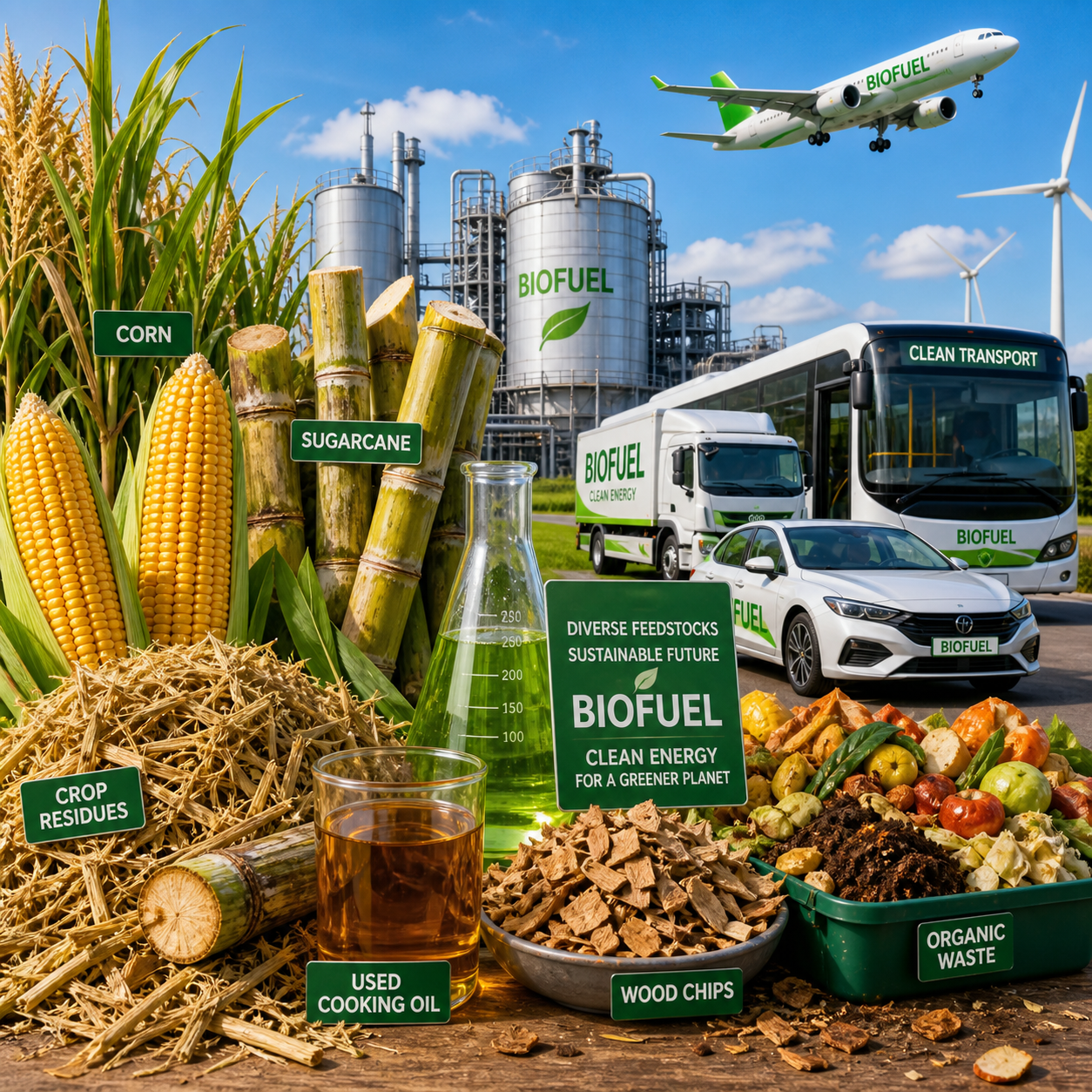
Biofuel demand has created new and substantial revenue streams for farming communities, particularly in countries where biofuel feedstocks like sugarcane, corn, palm oil, and soy are already established crops.
In Brazil, the sugarcane sector employs hundreds of thousands of workers and generates significant export revenue — not just from ethanol but from electricity co-generated at mills. In the US Corn Belt, ethanol demand has supported corn prices through periods when export markets softened. Indonesian smallholder palm oil farmers have seen income linked partly to biodiesel blending targets, though the land-use dimension of palm expansion is contested.
The emergence of next-generation feedstocks adds a different dimension. Waste biomass, municipal solid waste, and agricultural residues don't compete with food crops for land, making them attractive from both an economic and political standpoint. Algae-based biofuels remain largely pre-commercial but represent a long-term feedstock option that could decouple biofuel production from agricultural commodity cycles entirely.
Land-use pressure is a real constraint. As feedstock demand rises, marginal land gets brought into production, which carries costs — ecosystem conversion, water use, and in some regions, displacement of subsistence farming. These pressures don't negate the economic benefits, but they do mean that feedstock sourcing policy matters enormously to the overall economic calculus.
Job Creation and Economic Development in the Biofuel Sector
The biofuel value chain generates employment across multiple stages — cultivation, harvesting, transport, processing, refining, and distribution — with particularly strong effects in rural and emerging economies.
Labor intensity varies significantly by feedstock and production method. Sugarcane harvesting in parts of Africa and Latin America remains relatively labor-intensive, creating rural wage income that would otherwise be absent. Corn ethanol in the US is more mechanized, generating fewer farm jobs per unit of output but more skilled processing and logistics roles. The supply chain and logistics requirements of biofuel distribution — storage, blending infrastructure, tanker transport — create additional employment in sectors that often overlap with existing fuel distribution networks.
For emerging economies, the development angle is significant. Countries like Ethiopia, Mozambique, and the Philippines have pursued biofuel programs partly as rural development strategies, aiming to generate smallholder income while reducing fuel import bills. The outcomes have been mixed — policy consistency and infrastructure investment matter as much as the biofuel mandate itself — but the employment potential is genuine when programs are well-designed.
One underappreciated job category is in carbon accounting and sustainability certification. As renewable energy investment scales up and corporate buyers demand verified sustainability credentials, demand for agronomists, auditors, and supply chain analysts with biofuel expertise is growing.
The Food-versus-Fuel Tradeoff — A Real Economic Risk
The food-versus-fuel debate is not settled, and anyone claiming otherwise is oversimplifying a genuinely complex economic relationship.
When corn, sugarcane, or vegetable oils are diverted to fuel production, they become part of a larger demand pool competing with food and feed uses. The 2007–2008 global food price crisis brought this tension into sharp focus, and while the causal relationship between biofuel expansion and food prices is debated among economists, the directional effect — that increased feedstock demand puts upward pressure on agricultural commodities markets — has empirical support.
The magnitude of that pressure depends on several factors: how much of a crop is diverted, whether production can expand to meet both demands, and how elastic food demand is in affected regions. In wealthy countries, higher corn prices translate to marginally more expensive processed food. In low-income countries where staple grains consume a large share of household budgets, the same price increase can be a genuine hardship.
This is the tradeoff the biofuel industry must navigate responsibly. Advanced biofuels — those derived from waste biomass, agricultural residues, or algae — offer a partial resolution by avoiding direct competition with food crops. Scaling these pathways is the most credible long-term answer, but they remain more expensive to produce than first-generation alternatives. Policy frameworks that incentivize advanced feedstocks while phasing down food-crop-based mandates are the direction most serious analysts recommend.
Investment Flows, Government Incentives, and Market Growth Projections
Public and private capital is flowing into biofuels at a pace that reflects genuine confidence in the sector's long-term role in the energy mix — not just optimism, but strategic positioning ahead of tightening carbon regulations.
Government incentives remain the cornerstone of biofuel economics. Tax credits, blending mandates, and carbon pricing mechanisms collectively reduce the effective cost gap between biofuels and fossil fuels. The US Inflation Reduction Act extended and expanded tax credits for biofuel producers, including new incentives for sustainable aviation fuel. The EU's ReFuelEU Aviation regulation mandates increasing SAF blending ratios through 2050, creating a long-duration demand signal for investors.
Private investment has followed. Major energy companies, agricultural traders, and financial investors have committed capital to new refining capacity, feedstock supply chains, and technology development. According to the International Energy Agency, bioenergy investment needs to roughly triple by 2030 to stay on track with net-zero scenarios — a figure that underscores both the opportunity and the gap between current trajectories and climate targets.
Market growth projections vary by scenario, but the directional consensus is clear: biofuel demand will grow, driven by hard-to-electrify sectors — aviation, shipping, heavy trucking — where liquid fuels will remain necessary for decades. That structural demand creates a more durable economic foundation than the mandate-dependent markets of the early 2010s.
What Biofuel's Economic Rise Means for Clean Transport
The economic momentum building behind biofuels translates directly into cleaner road, aviation, and maritime transport — and that connection is worth making explicit for anyone engaged in sustainability advocacy or clean transport planning.
In road transport, blending mandates mean that every liter of E10 petrol already contains a biofuel component. As mandates strengthen and HVO becomes more widely available, the carbon intensity of the existing vehicle fleet declines without requiring consumers to change their behavior or purchase new vehicles. This is economically significant: it delivers emissions reductions through supply-side change rather than demand-side disruption.
Aviation is where biofuel economics are most consequential in the near term. Sustainable aviation fuel can reduce lifecycle emissions by 50–80% compared to conventional jet fuel, and it's compatible with existing aircraft engines. The cost premium over conventional jet fuel remains substantial, but scale, policy support, and technology learning curves are all moving in the right direction. Airlines, under mounting pressure from corporate travel buyers and regulators, are signing long-term SAF offtake agreements that provide the revenue certainty producers need to build new capacity.
Maritime shipping — one of the hardest sectors to decarbonize — is beginning to explore biofuel blends as a bridge fuel while ammonia and methanol propulsion technologies mature. The economic logic is similar: use existing infrastructure, reduce emissions now, buy time for deeper technology transitions.
For those working on clean transport awareness, the biofuel story is neither a simple success nor a cautionary tale. It's a sector in transition, generating real economic value and real environmental progress while carrying genuine risks that require honest policy design. The economic case for biofuels is strongest when feedstocks are sustainable, mandates are well-calibrated, and the benefits reach the farming communities and workers who make production possible.
Frequently Asked Questions
Are biofuels actually cheaper than fossil fuels for consumers?
Generally, no — at least not at the pump. Biofuels typically cost more to produce than their fossil fuel equivalents, and without blending mandates or tax incentives, they would struggle to compete on price alone. However, blending requirements mean consumers are already using biofuels without a direct price choice. In some markets, ethanol blends are priced competitively with pure gasoline, particularly when oil prices are high.
Which countries are leading in biofuel production and economic benefit?
The United States and Brazil dominate ethanol production, together accounting for the majority of global supply. Indonesia and Malaysia lead in palm-based biodiesel. The EU is a significant producer and consumer of biodiesel from rapeseed and waste fats. Economically, Brazil's sugarcane ethanol sector is often cited as the most mature and cost-competitive biofuel program in the world.
Do biofuels create more jobs than the fossil fuel industry they replace?
On a per-unit-of-energy basis, biofuel production tends to be more labor-intensive than oil extraction and refining, particularly when feedstock cultivation is included. However, direct comparisons are complicated by geography, mechanization levels, and the different skill profiles involved. The net employment effect of energy transition depends heavily on whether displaced fossil fuel workers can access retraining and new opportunities in the renewable sector.
How do blending mandates affect fuel prices at the pump?
The effect is modest and varies by market. When biofuel feedstock costs are lower than petroleum, mandates can slightly reduce pump prices. When feedstock costs are higher — which is more common — mandates add a small premium. In most markets, the price impact of blending mandates is smaller than the volatility introduced by global oil price swings, making it a secondary concern for most consumers.
Can advanced biofuels from waste or algae avoid the food-versus-fuel problem?
Yes, in principle. Feedstocks like municipal solid waste, agricultural residues, and algae do not compete directly with food crops for land or water in the same way corn or sugarcane do. The challenge is cost: advanced biofuels remain more expensive to produce than first-generation alternatives, and the technology pathways — particularly for algae — are still maturing. Policy incentives specifically targeting advanced feedstocks are the most effective tool for accelerating their commercial viability. You can explore more about sustainable fuel pathways through the US Department of Energy's Bioenergy Technologies Office.